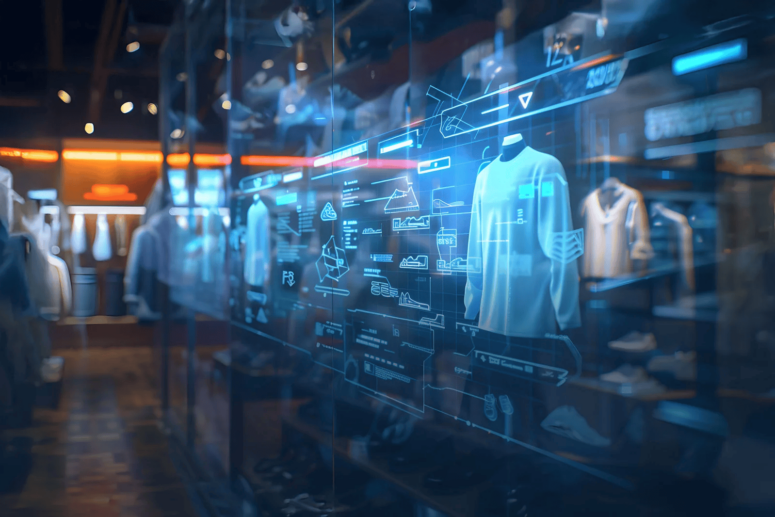
Types, Benefits, Technologies, and Real-World Use Cases
Virtual stores are redefining how customers discover, explore, and purchase products online. By combining immersive digital environments with intelligent automation, businesses can create engaging shopping experiences that feel personal, interactive, and scalable.
Below, we break down the key types of virtual stores, their benefits, enabling technologies, real-world examples, challenges, and how we help businesses build and optimize them.
What Is a Virtual Store?
A virtual store is a digital shopping environment that goes beyond traditional ecommerce websites. It can replicate in-store experiences, guide customers interactively, and integrate AI-driven personalization, automation, and real-time engagement.
Virtual stores range from enhanced 2D experiences to fully immersive 3D or augmented reality environments.
Types of Virtual Stores
1. AI-Enhanced Ecommerce Stores
Traditional online stores upgraded with AI-powered features such as product recommendations, intelligent search, automated customer support, and personalized offers.
Best for: Retailers looking to increase conversions without rebuilding their entire ecommerce platform.
2. 3D Virtual Showrooms
Interactive, three-dimensional environments that allow customers to explore products as if they were in a physical store.
Best for: Luxury retail, automotive, furniture, fashion, and electronics.
3. Augmented Reality (AR) Shopping Experiences
AR-enabled stores allow customers to visualize products in real-world environments using their phone or device.
Best for: Home décor, apparel, beauty, and lifestyle brands.
4. Metaverse-Based Virtual Stores
Persistent virtual spaces hosted on metaverse platforms where users can browse, socialize, and shop using avatars.
Best for: Brands focused on innovation, digital-native audiences, and experiential marketing.
5. Conversational & Assistant-Driven Stores
Stores powered by AI chatbots or voice assistants that guide users through discovery, comparison, and checkout.
Best for: Service-based businesses, complex catalogs, and high-consideration purchases.
Benefits of Virtual Stores
Enhanced Customer Engagement
Interactive experiences keep customers on your site longer and encourage deeper product exploration.
Personalized Shopping Journeys
AI adapts product recommendations, messaging, and offers based on behavior and preferences.
Higher Conversion Rates
Guided experiences reduce friction, confusion, and decision fatigue.
Scalability Without Extra Staff
Automation handles repetitive tasks like product guidance, FAQs, and order support.
Rich Data & Insights
Virtual stores generate behavioral data that helps optimize layouts, messaging, and offers.
Key Technologies Behind Virtual Stores
- Artificial Intelligence & Machine Learning
- Computer Vision & Image Recognition
- 3D Modeling & WebGL
- Augmented Reality (AR) Frameworks
- Conversational AI & Natural Language Processing
- Ecommerce Platforms & APIs (Shopify, WooCommerce, Magento)
- CRM, ERP, and Inventory System Integrations
- Cloud Infrastructure & Edge Computing
Real-World Virtual Store Examples
Retail & Fashion
Virtual fitting rooms, AI stylists, and 3D product previews reduce returns and increase confidence.
Furniture & Home Design
AR visualization allows customers to see how products fit in their space before purchasing.
Automotive
3D showrooms and guided configurators let buyers explore features without visiting a dealership.
Consumer Electronics
Interactive demos explain features, comparisons, and compatibility in real time.
Challenges of Virtual Stores
Technical Complexity
Building immersive and intelligent experiences requires integrating multiple systems and platforms.
Performance & Device Compatibility
Virtual experiences must remain fast, responsive, and accessible across devices.
Data Privacy & Security
AI-driven personalization must comply with data protection regulations.
Adoption & User Education
Some users may need guidance when interacting with new digital shopping formats.
How We Help
We design and implement virtual store solutions that are practical, scalable, and results-driven.
Our services include:
- Virtual store strategy and experience design
- AI-powered personalization and recommendation systems
- Conversational AI and virtual shopping assistants
- Ecommerce platform integration and optimization
- Automation of customer support and order workflows
- Analytics, performance tracking, and continuous optimization
We focus on business outcomes, not just technology—helping you increase conversions, reduce operational load, and create memorable customer experiences.
Frequently Asked Questions
What’s the difference between a virtual store and a regular ecommerce website?
A virtual store adds interactivity, intelligence, and immersion—guiding customers instead of just listing products.
Do virtual stores require expensive hardware or VR headsets?
No. Most modern virtual stores run in standard web browsers and on mobile devices. VR is optional.
Can a virtual store integrate with my existing ecommerce platform?
Yes. Virtual stores can be layered on top of platforms like Shopify, WooCommerce, or custom systems.
How long does it take to build a virtual store?
Timelines vary depending on complexity, but most projects range from a few weeks to a few months.
Is AI required for a virtual store?
Not required, but AI significantly improves personalization, automation, and overall ROI.